Your company grew. Your systems didn't.

I fix that for founder-led B2B tech companies.

Commercial and operating systems, designed, built and embedded, from someone who co-founded a B2B software company and kept it growing through five technology generations, with 400+ customer organisations.

Write to me See the four services

The principle I work by

“How you do something matters more than what you do.”

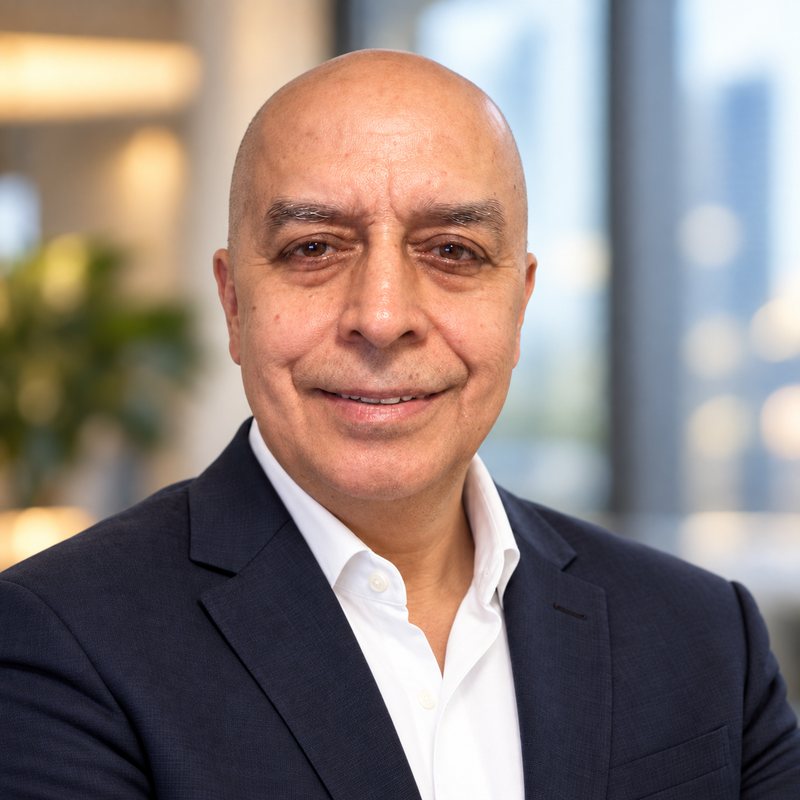
Sunil Uttamchandani

Four puzzle pieces: three fit together, one sits apart
Three pieces fit. One doesn't, yet. That gap is my job.
Sunil Uttamchandani

About Sunil

Why founders bring me in

I co-founded Mithi Software Technologies in 1990 and have helped run it for over 35 years.

We built 7+ products, served 400+ organisations, and took the business through five technology generations. Much of my later work was turning founder-dependent activity into systems a team could run.

My path has run from building technology, to building a technology business, to helping other founders build the systems behind theirs.

My guiding principle is that how you do something matters more than what you do. It's why I care as much about how a team runs a system as about the system itself.

Sunil Uttamchandani

Built

What I've built

Signal & Lever

Established 2026

I build the systems behind how your company wins, delivers and keeps customers.

My advisory practice for founder-led B2B tech companies of up to 200 people.

WinQualification, deal progression, pricing and proposals
DeliverSales-to-delivery handoffs, onboarding, cross-team workflows
KeepCustomer success, renewals, account reviews

How I work: diagnose, design, implement, enable.

Already at work: at a B2B IT solutions company, a focused assignment grew into a broader operating advisory role.

See the four services

Signal & Lever

Four ways to work together

Signal & Lever is my advisory practice for the commercial and operating side of founder-led B2B tech companies: how you win, deliver and keep customers. Each engagement has a fixed scope, a stated time cost and a clear outcome, ordered from the smallest first step to the largest commitment.

01 · Paid diagnostic

Find What's Holding Us Back

A focused diagnosis of one clearly defined commercial or operating problem. I examine the evidence, speak with the people involved, and identify what needs to change.

Outcome: Within two weeks, a clear view of the root cause and a prioritised plan to fix it.
1 to 2 weeks Fixed fee 90 min founder time
See full details

Your time: 90 minutes from the founder, 2 to 3 hours in total from relevant team members, and access to existing processes, systems and records.

What you get

  • A diagnosis of the problem and its likely root causes.
  • The three highest-priority changes to make.
  • An action plan setting out what to fix, how, and in what order.
  • A working session to review the findings and agree next steps.

Example: When 30% of proposals were coming back for clarification, the cause turned out to be pricing, not messaging.

Best for: Founders facing a persistent problem who want independent, experienced judgment before committing to a larger project.

Not for: Generic audits, broad strategic reviews, or recommendations made without access to real operational evidence.

Ask about this
02 · Fixed-scope sprint

Get Three Stalled Deals Moving

A hands-on sprint on three live opportunities that have slowed between customer interest and a commercial decision. Together, we find what is really blocking each one and agree the actions to move it forward.

Outcome: Within four weeks, each deal has a clearer route to a buyer decision.
2 to 4 weeks Fixed scope 60 min a week
See full details

Your time: About 60 minutes a week from the founder or commercial leader, plus 60 to 90 minutes a week from the relevant deal owners.

What you get

  • A structured diagnosis of three real opportunities.
  • A stakeholder, decision and blocker map for each deal.
  • Specific actions to address commercial, technical or approval barriers.
  • Improved proposal or buyer-facing material where needed.
  • A reusable opportunity-progression framework for future deals.

A note on outcomes: Each deal leaves the sprint with agreed next actions and better visibility into what it needs. Closing depends on the buyer and cannot be guaranteed.

Best for: B2B software and technology-services businesses with qualified opportunities slowing down during evaluation, pricing, approval or procurement.

Not for: Lead generation, appointment setting, commission-based closing, or managing salespeople.

Ask about this
03 · Implementation project

Make Commercial Execution Less Founder-Dependent

I turn founder-held judgment and informal practices into a working commercial system. That covers qualification, CRM workflows, proposals, pricing decisions and handoffs, focused on the gaps that matter most.

Outcome: Within six weeks, a documented commercial process the team is trained to run.
4 to 6 weeks Fixed scope 1 to 2 hrs a week
See full details

Your time: 1 to 2 hours a week from the founder or commercial leader, plus 2 to 3 hours a week from the people involved during design, testing and training.

What you get

  • A redesigned commercial workflow for the agreed scope.
  • CRM stages, data requirements and supporting configuration where appropriate.
  • Qualification frameworks, templates, checklists and playbooks.
  • Clear ownership, decision points and follow-up practices.
  • Team training and an initial adoption review.

The longer-term aim: More consistent execution, and fewer routine commercial decisions that need the founder.

Best for: Founder-led businesses with an established offering, real customers and a small commercial team that needs more structure.

Not for: Daily sales management, enforcing activity targets, routine reporting, or implementing a large enterprise CRM from scratch.

Delivery note: CRM configuration beyond standard setup, data migration or integrations may need your internal team or a specialist you engage separately. This will be agreed at scoping.

Ask about this
04 · Phased project

Fix How Work Moves Across Teams

I redesign the workflows where sales, delivery, technology and customer teams depend on each other. I then help implement the changes and train the team to sustain them.

Outcome: Within 8 to 12 weeks, one or two critical processes redesigned, documented and running in a pilot.
8 to 12 weeks Phased 1 to 2 hrs a week
See full details

Your time: 1 to 2 hours a week from the founder or operating leader, plus about 2 to 3 hours a week from the relevant process owners, with more participation during rollout.

What you get

  • Mapping and diagnosis of the selected end-to-end processes.
  • Redesigned workflows, roles, responsibilities and handoffs.
  • SOPs, checklists, templates and supporting tools.
  • Implementation in a pilot or defined business area.
  • Workshops, training and an adoption review.

The longer-term aim: Fewer avoidable handoffs, less rework and delay, and less reliance on individual intervention. Broader gains depend on sustained adoption beyond the initial project.

Best for: Founder-led businesses with established customers and teams that are feeling operational friction as they grow.

Not for: Full organisational restructuring, enterprise-wide transformation, outsourced operations management, or large-scale custom software development.

Delivery note: A focused redesign and pilot I deliver personally. Company-wide rollouts, extensive integrations or multi-department implementation need dedicated client resources and possibly specialist support.

Ask about this

Any engagement can begin with a one-day working session with your leadership team, and continue as ongoing advisory support once the work is in place.

Proof

What changed, in numbers

As an advisor

From 10 Hours of Sales Reviews to One

Before8 to 10 hrs
After~1 hr

Founder's weekly review time, cut by close to 90% within about two months.

Why this matters to you: If your week goes into chasing updates before you can decide anything, the gap is usually in the system, not the people. Closing it rarely needs another management layer.

Read the case

Context: A 10-person, founder-led B2B IT solutions company, tracking between 6 and 12 live RFQs and quotes at a time. The founder was spending 8 to 10 hours a week on sales reviews, because conversations, quotations and follow-ups lived in individual updates rather than a shared system.

What I did: I was brought in for a sales reporting assignment, which grew into a broader operating advisory role. With the founder and team, I helped build three things: Freshsales workflows with clear opportunity stages, dated next actions on every RFQ and quote, and written updates so the weekly review could focus on decisions.

Result: Within about two months, weekly review time fell from 8 to 10 hours to about one, close to 90% less. That hour now goes to decisions, not status.

As an operator

A Renewal System That Doesn't Depend on Memory

Before1 in 10
After1 in 50

Customers lost each year. Retention rose from about 90% to 98% over 3 to 4 years, and held for 8 to 10.

Why this matters to you: If renewals and customer health still depend on spreadsheets and individual memory, recurring revenue is more exposed than it looks. A clear, owned system makes retention a discipline rather than an effort.

Read the case

Context: A B2B enterprise software and SaaS company with 200+ enterprise customers. Renewals ran on spreadsheets, ownership was not always clear, and customers often heard from us only as renewal dates approached. The business was losing roughly 1 in 10 customers a year.

What I did: As co-founder, I designed a CRM-driven renewal system and helped implement it. Three decisions mattered most: every account got a named owner, renewal reminders started well in advance, and customer health signals and quarterly business reviews flagged risk early. A dedicated team ran it, and I reviewed key accounts and exceptions.

Result: Over 3 to 4 years, annual customer and revenue retention rose from about 90% to about 98%. Losses went from roughly 1 in 10 customers a year to about 1 in 50, and that level held for 8 to 10 years. The system was one contributor, not the only one.

Get the Renewal Health Checklist
As an operator

When the Pitch Wasn't the Problem

Before1 in 3
After~none

Proposals returned for clarification, within 2 to 3 months of a pricing rebuild.

Why this matters to you: If buyers like your product but deals slow at evaluation or pricing, the problem is often how the offer is structured, not how it is pitched. That is fixable.

Read the case

Context: A bootstrapped, 40-person B2B SaaS company selling into mid-sized and large organisations. New deals were stalling at proposal stage, with nearly 1 in 3 proposals coming back for an explanation of the commercials. The obvious response was to sharpen the messaging.

What I did: As co-founder, I personally led enterprise selling and closed deals worth about US$1 million in ARR over roughly four years. I traced the stall to pricing that buyers found hard to explain to their own stakeholders. I revamped it around a simpler SMB model.

Result: Within 2 to 3 months, proposals returned for clarification fell from nearly 1 in 3 to almost none. Stakeholders on the buyer's side understood the commercials without us having to explain them.

Get the Proposal Clarity Check

How an engagement works

From your note to a working plan

  1. Day 0

    1. Write to me

    Tell me the question, the problem, or the service you have in mind.

  2. Within 2 working days

    2. My reply

    I reply personally. If there is a fit, we schedule a 30-minute conversation to confirm the problem and agree the scope.

  3. Weeks 1 to 2

    3. Diagnostic

    I review the evidence and speak with your team. It asks 90 minutes of you and 2 to 3 hours of your team.

  4. Week 2 onwards

    4. Plan, then build

    Three priority changes, in order, reviewed together. Act on them yourself, or continue into a project and ongoing support.

Credentials and endorsements

Where my experience sits

Industries

Enterprise software and B2B SaaS Cloud and managed services Messaging, collaboration and archiving IT infrastructure and services Systems integration

Company sizes and reach

Founder-led, 1 to 200 people Ran a bootstrapped 40-person business Sold into mid-sized and large enterprises Global, remote-first

What clients and customers say

Signal & Lever client
Communication was clear and professional throughout the project. Delivered work on time, provided regular updates, and was always available for calls and discussions when needed. Highly recommended for quality and reliability.
Client, B2B IT solutions company
Upwork review · 5.0 · May 2026
Mithi customer · Vaultastic
Very good support staff, prompt response and action on the queries raised by the customers, minimum downtime.
Customer, financial services
Capterra review · 5.0 · September 2025
Mithi customer · Vaultastic
We have been using this for the last 3 years and it is a good and user friendly data backup and archival application.
IT lead, media company
Gartner Peer Insights review · 5.0 · December 2024

Write to me

Tell me what you're working on.

A question, a problem you're facing, or one of the services above. A few lines is enough. I read every note personally and reply within 2 working days.

Prefer LinkedIn? Connect with me there

Send me a note

A short form: who you are, your company, and what you need. It takes about two minutes and opens in a new tab.

A question A problem you're facing One of the services
Write to me